

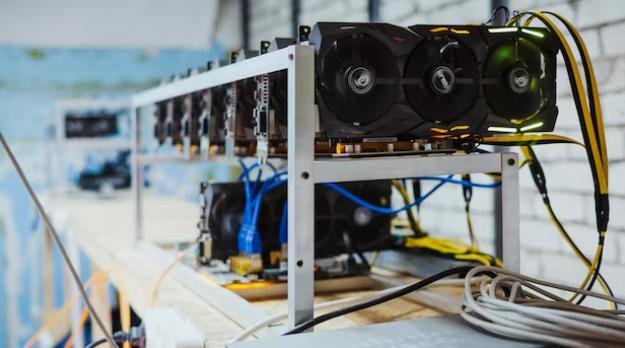
Crypto miners essentially solve complex math problems to verify crypto transactions and get rewarded in crypto for their efforts. So their profits depend largely on two factors:
- Crypto prices
- Mining costs like hardware and electricity
When Bitcoin first launched in 2009, mining cryptocurrency required little more than a home PC. Early adopters could earn coins simply by having their computers solve complex math problems. As interest grew, so did difficulty and competition. Today, earning crypto requires warehouses packed with specialist mining rigs running complex algorithms 24/7.
The mining industry has evolved from a hobby into a massive operation with razor-thin profit margins. When crypto prices were soaring, so were mining profits.
So what killed the crypto mining buzz?
In a nutshell: plummeting crypto prices, skyrocketing energy costs, and stiff competition. There has been a massive influx of miners hoping to get rich quick, driving the difficulty and competition level up, while the returns have gone down.
For those willing to put in the effort and commitment, success is still possible. Professionals are now using sophisticated software to maximize efficiency and reduce overhead costs.
There are other factors to consider too:
1. Crypto market crash – The values of major cryptocurrencies like Bitcoin and Ethereum have plunged dramatically from their all-time highs. With crypto down across the board, so are mining returns. Even the most efficient rigs are struggling to turn a profit.
2. Surging energy prices – Cryptocurrency mining requires an enormous amount of computing power and electricity. As energy costs have spiked worldwide, heavily impacting profit margins for miners.
3. Increased difficulty – The more miners competing for coins on a network, the harder it becomes to mine. Bitcoin mining difficulty has increased massively as participation grew. This requires more hashrate (mining power) to earn diminishing returns.
4. Mining economics – Mining rigs, space, maintenance, and energy bills – the overheads of crypto mining stack up fast. With slimmer rewards available, many miners are operating at a loss in the current climate.
5. Regulatory crackdowns – Some governments have instituted bans or stricter regulations against crypto mining, notably China which previously dominated the sector. This has disrupted mining operations and the hashrate powering certain networks.
6. Environmental concerns – The staggering energy consumption of crypto mining has come under scrutiny. Mining companies have had to become more sustainable to withstand regulatory and public pressure.
This combination of factors has put immense strain on the profitability of crypto mining . With the difficult economic outlook, many miners are abandoning their rigs to cut losses.
The Outlook for Crypto Mining
The million dollar question – does crypto mining have a future or will it soon go extinct? The truth most likely lies somewhere in the middle.
Here are a few scenarios that may play out:
- Crypto prices rebound and mining profits bounce back, extending the lifespan of mining.
- Innovations make mining greener and more efficient, while laws become more favorable.
- Many weaker miners shut down but biggest players consolidate and dominate.
- Proof-of-stake models replace mining for some coins but others still require it.
- Mining evolves into a more specialized role in supporting blockchain networks.
Crypto mining probably faces continued uncertainty and upheaval. But one of its core values remains – mining ensures cryptocurrency networks are decentralized and secure. That foundational need suggests crypto mining still has an important role to play. Rather than die out completely, it may just require patience and evolution.
There will be more losers and winners in the mining industry as it goes through change. But for die-hard crypto believers willing to ride out the storm, there are still glimmers of opportunity flickering through the doom and gloom. Like a firewall protecting a network, crypto mining is not going down without a fight. The days of easy profits are likely gone. But for committed miners taking the long-term view, rumors of crypto mining’s death may yet prove greatly exaggerated.
So, Is It Dead or Just Getting Started?
No, crypto mining is not dead. Despite recent challenges like declining profits, regulatory uncertainty, and high energy costs, crypto mining remains essential for securing blockchain networks and powering innovation.
As the industry evolves, miners will be required to adjust their strategies to stay in the game. But with cryptocurrency still relatively new and many potential use cases yet untapped, crypto mining may still have a long road ahead.
With the right strategy, crypto mining can still be profitable despite headwinds like high energy costs and low crypto prices.
Here are tips for miners:
- Leverage affordable renewable energy sources like solar, wind, or hydropower to reduce electricity expenses
- Remain flexible on which coins to mine based on profitability guidance from mining pools
- Consider joining a mining pool to decrease hardware requirements and access steady payouts
- Diversify investments beyond just Bitcoin to capitalize on gains from rising alternative crypto assets
- Buy hardware at lower prices during market downturns when rigs are oversupplied
- Consider reinvesting mining profits to upgrade to more powerful hardware that increases capacity
- Adopt emerging technologies like immersion cooling that improves mining performance
The economic viability of crypto mining ebbs and flows. But miners able to adapt to ever-changing markets and maximize their operational efficiency can persevere through ups and downs. Disciplined miners still have pathways to profit even in today’s turbulent markets. Although crypto mining is not as wildly lucrative as it is before , it is still possible to make money in the sector.