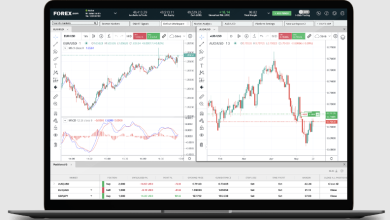


Trading cryptocurrencies like Bitcoin and Ethereum has become immensely popular in recent years. With high volatility and potential for significant profits, crypto trading presents lucrative opportunities for traders who can capitalize on price fluctuations in the market. However, crypto trading also comes with substantial risks due to the same volatility. This is where technical indicators come into play.
Technical indicators are mathematical calculations based on historical price, volume, or open interest data that aim to forecast future price movements. These indicators help traders make more informed decisions and develop effective trading strategies. While no single indicator can predict price movements with complete accuracy, combining the right indicators can greatly improve your chances of success in crypto trading. In this article, we will explore the best winning combination of technical indicators for trading cryptocurrencies.
Moving Averages
Moving averages are one of the most popular and widely used indicators in technical analysis. They help smooth out price fluctuations to identify trends and reversal points. The two most common types of moving averages are:
1. Simple Moving Average (SMA)
An SMA calculates the average closing price over a set period. For example, a 20-day SMA shows the average closing price over the last 20 days. SMAs provide support and resistance levels for the current price.
2. Exponential Moving Average (EMA)
An EMA gives more weight to recent prices in its calculation, making it more responsive to the latest price changes. This allows it to react faster to emerging trends compared to SMAs. The 12 and 26-day EMAs are commonly used for crypto trading.
Using EMAs along with SMAs provides a robust system for identifying trend direction. EMAs help you stay on the right side of the trend, while SMAs confirm the strength of breakouts. Combining the 12 and 26-day EMA with the 20 and 50-day SMA covers short, medium and long-term trends.
Relative Strength Index (RSI)
The RSI measures the magnitude and velocity of price movements to determine overbought and oversold conditions in the market. It oscillates between 0 and 100 – a reading above 70 indicates an overbought market and a reading below 30 suggests an oversold market.
The RSI works best when used along with moving averages. Initiating trades in the direction of the trend when the RSI reaches overbought or oversold territories could lead to higher probability setups. This combination of indicators provides both trend direction and potential entry points.
Bollinger Bands
Bollinger Bands consist of a simple moving average line bounded by two standard deviations above and below. During periods of high volatility, the bands widen and contract during low volatility. Price tends to revert to the moving average in Bollinger Bands.
Bollinger Bands complement RSI well. RSI identifies overbought/oversold levels, while the Bollinger Bands give insight into periods of high and low volatility. Entering long trades as the price rebounds from the lower band when RSI is oversold could capture an emerging uptrend early.
The Winning Combination
Combining moving averages, RSI and Bollinger Bands creates a solid technical trading system for cryptocurrencies. Here are some ways this indicator combo can be used:
- Identify the trend using moving averages – the longer-term SMA provides the trend while the shorter EMA gives entry signals in the trend’s direction.
- Use RSI to anticipate potential reversals at extremes – overbought above 70 and oversold below 30.
- Enter trades when price rebounds from the Bollinger Bands in the direction of the prevailing trend.
- Exit trades when RSI reaches the opposite extreme or moving average crossovers signal a trend change.
- Use wider Bollinger Bands to identify periods of high volatility for tighter stops.
This combination provides high-probability setups during trending moves as well as range-bound conditions. Moving averages define the trend, RSI identifies extremities to enter countertrend, and Bollinger Bands provide confirmation from which to trade the reversion.
Using these indicators together can significantly improve your timing of entries and exits. Let’s go through some examples of how this could work when trading Bitcoin:
Uptrend Entry
- The 20 and 50 SMAs are sloping up, with price above both averages – uptrend confirmed
- Bitcoin price pulls back to the 20 SMA support while RSI drops below 30 into oversold territory
- As RSI diverges positively and starts rising, price bounces from 20 SMA dynamic support
- Entry long on the breakout above 20 SMA with stop below recent swing low
Range Trading
- Bitcoin price oscillating between narrow 20 and 50 SMAs, indicating consolidating market
- RSI reaches over 70, signaling short-term overbought conditions
- Price hits upper Bollinger Band and starts declining
- Enter short trade with the RSI peak and target the 20 SMA for support
Downtrend Confirmation
- The 20 SMA already crossed below 50 SMA, both pointing down in downtrend
- Bitcoin rallies temporarily into the declining 20 SMA where RSI goes above 70
- Price forms bearish divergence with RSI, then drops sharply
- Enter short on breakdown below 20 SMA with stops above the high
Mastering this combination of versatile indicators – moving averages, RSI and Bollinger Bands – provides a solid technical foundation for trading cryptocurrencies. Just remember to always use stops, follow your trading rules and manage risks. This winning indicator combo gives you an edge in determining high-probability setups in both trending and range-bound markets.
Key Benefits of Using Multiple Indicators
There are several key benefits gained by combining indicators like moving averages, RSI and Bollinger Bands rather than relying on a single indicator:
1. Confirmation
Getting confirmation from multiple indicators validates high-probability trading signals and improves the odds of success. For example, oversold RSI with price at lower Bollinger Band confirms good reversion setup.
2. Divergence
Divergence between price and indicator gives advanced warning of potential reversals. If RSI is rising while price falls, it signals bullish divergence and impending uptrend.
3. Trend Context
Moving averages define whether the prevailing trend is up, down or range-bound. This gives context for counter-trend trades when RSI is overextended.
4. Timing Improvement
Combining indicators fine-tunes trade entry and exit timing. Moving average crossovers can trigger exits while RSI warns of overextensions.
5. Risk Management
Bollinger Bands adjust to volatility, giving a contextual stop-loss level instead of a fixed amount. Wider bands require wider stops.
In short, combining indicators provides more information than analyzing the market through the lens of a single tool. Layering indicators across different time horizons improves high probability setups.
Choosing the Right Indicators
With hundreds of technical indicators to choose from, how do you select the most effective ones to use? Here are some tips:
1. Focus on versatile indicators
Opt for flexible indicators like moving averages and Bollinger Bands that work across different market conditions, instead of limited tools like Aroon or Ichimoku Cloud.
2. Combining trends and momentum
Blend trend-following indicators like moving averages with indicators that gauge momentum and extremes like RSI or Stochastic Oscillator.
3. Leading vs lagging indicators
Leading indicators like RSI help spot potential reversals early while lagging tools like moving averages confirm trend changes. Blend both types.
4. Long, medium and short-term
Monitor the long-term trend along with medium and short-term momentum. For example, the 50, 20 and 5 SMA combo.
5. Volume confirmation
Add indicators that incorporate volume like On Balance Volume to confirm price action and divergences.
6. Avoid information overload
Limit to 3-4 indicators at most. Too many tools can contradict each other and create analysis paralysis.
The best approach is to start with a couple of versatile indicators like moving averages and RSI and then add other tools gradually based on your trading approach. Focus on modalities that provide multiple perspectives on price action.
Optimizing Indicator Usage
While combining technical indicators offers many benefits, you need to use them skillfully to maximize their efficacy. Here are some tips:
1. Don’t rely on indicators alone
Effective trading also requires assessing fundamental drivers, sentiment, volatility, risk management and your own biases.
2. Use signals and context together
Blending indicator signals with analysis of price action, market structure and momentum leads to higher conviction trades.
3. Adapt settings for volatility
Faster settings may be required for volatile crypto markets compared to stocks. For example, a 10-30 RSI rather than default 14.
4. Watch for divergence
If price and indicator move in opposite directions, it signals loss of momentum and likely reversals.
5. Define trading rules
Create specific rules for your system focused on high probability setups. Follow them consistently.
6. Tailor strategies for changing conditions
Tweak strategies based on trends, ranges and volatility – what works in a bull market may underperform in choppy markets.
Indicators work best when paired with a structured yet dynamic trading approach optimized for changing market conditions. Focus on high probability setups with confirmation from combined indicators.
Conclusion
Technical indicators remain indispensable tools for traders aiming to profit from the volatile crypto markets. Using a winning combination of versatile indicators like moving averages, RSI and Bollinger Bands enables traders to identify high-probability trading opportunities in alignment with the prevailing trend.
By confirming setups across different time frames, these indicators provide robust signals for entries and exits. RSI identifies potential reversals at extremes while Bollinger Bands supply dynamic support and resistance levels. Moving averages smooth out price action to reveal the underlying trend.
Learning to integrate signals from multiple indicators creates a synergistic effect, fine-tuning entries and exits while improving risk management. Traders are more likely to succeed by blending indicators that provide cross-perspective market analysis. With the right combination of indicators, traders can gain an edge in the exciting arena of crypto trading.